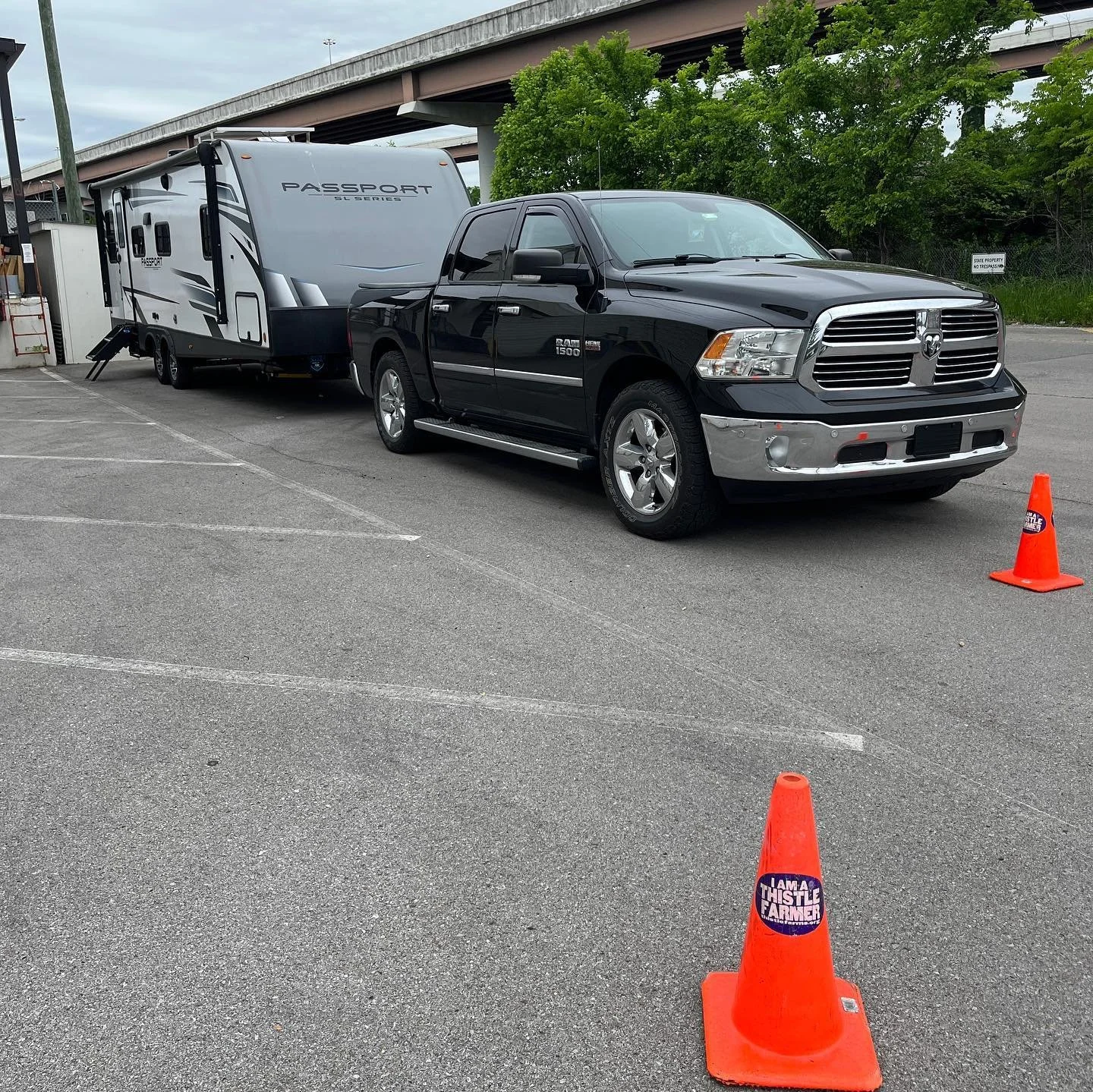
Parking Lot Perspective: Finding Grace at Thistle Farms
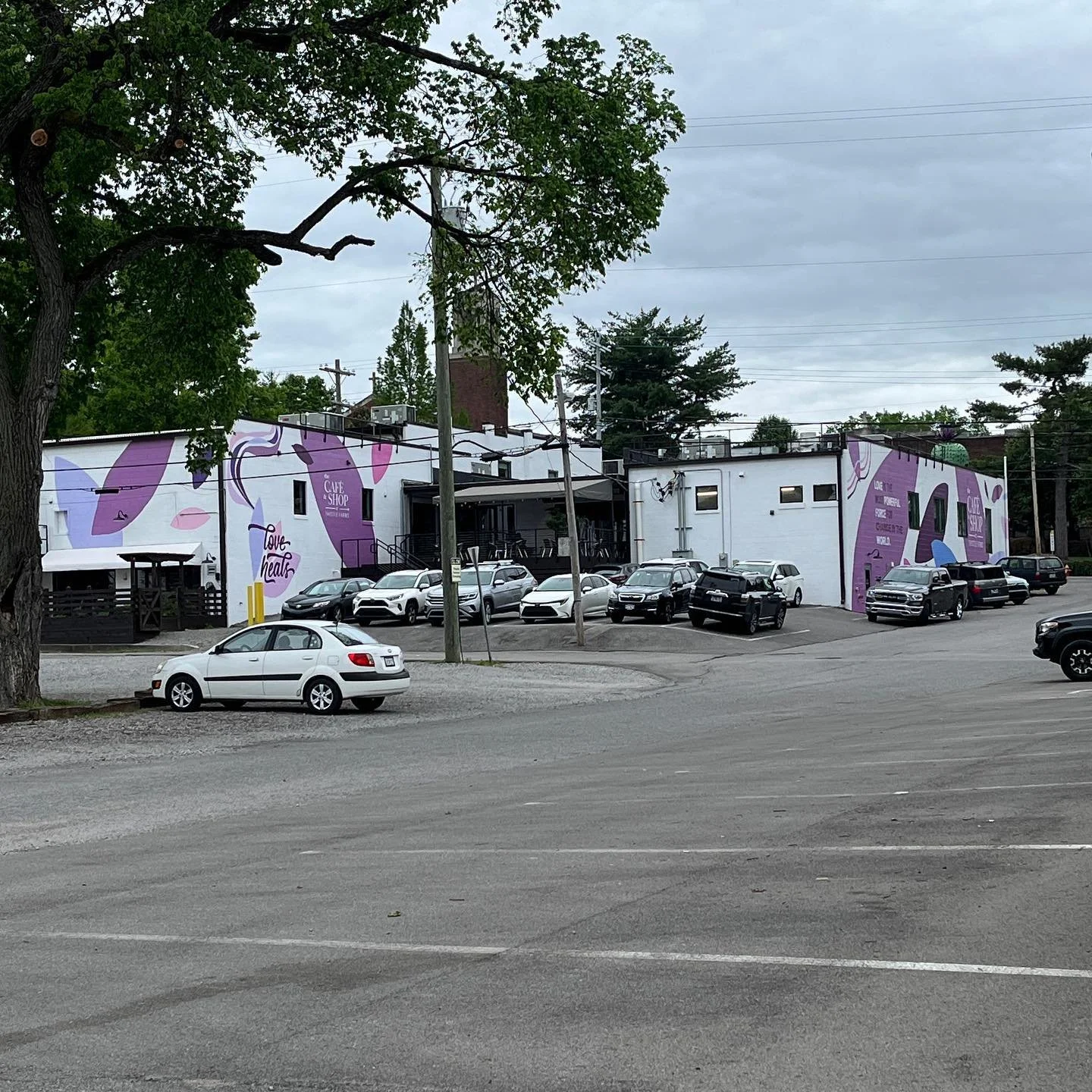
It sounds like a pretty straightforward sentiment — maybe even an aspirational virtue. For us, it all started with a book, a few lavender-scented dryer balls, and eventually, a curiosity mixed with a longing to support the cause. That’s how we ended up in Nashville, Tennessee — parked under an overpass, in an alley, next to a dumpster.
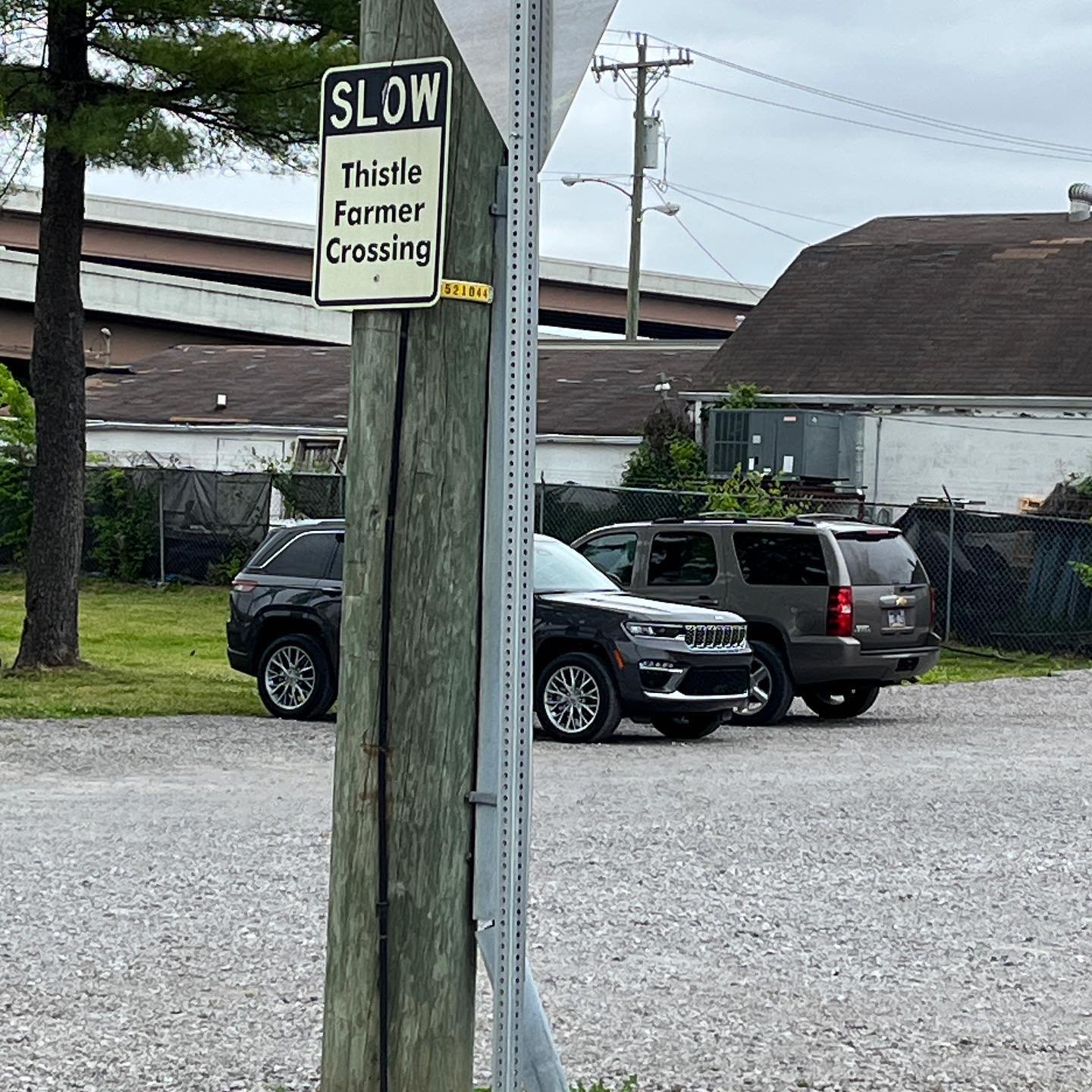
For new RV travelers like us, this was unexpected, to say the least. We’d seen people overnight at Walmart, truck stops, Cracker Barrel parking lots, Harvest Hosts (which we’ll dive into in the coming weeks), and a handful of other unconventional spots. But before you think we’d completely lost our minds — this was planned. We called ahead, requested permission to stay overnight, and even followed up closer to the date to make sure it was still “approved.”
We genuinely wanted to support the mission, and we had no idea when — or if — we’d ever have the opportunity again. So… we went for it. When you hear a name like Thistle Farms, your mind automatically paints a picture of rolling hills and animals, sunsets, and moon-washed treelines just beyond the property. This stay was anything but that.
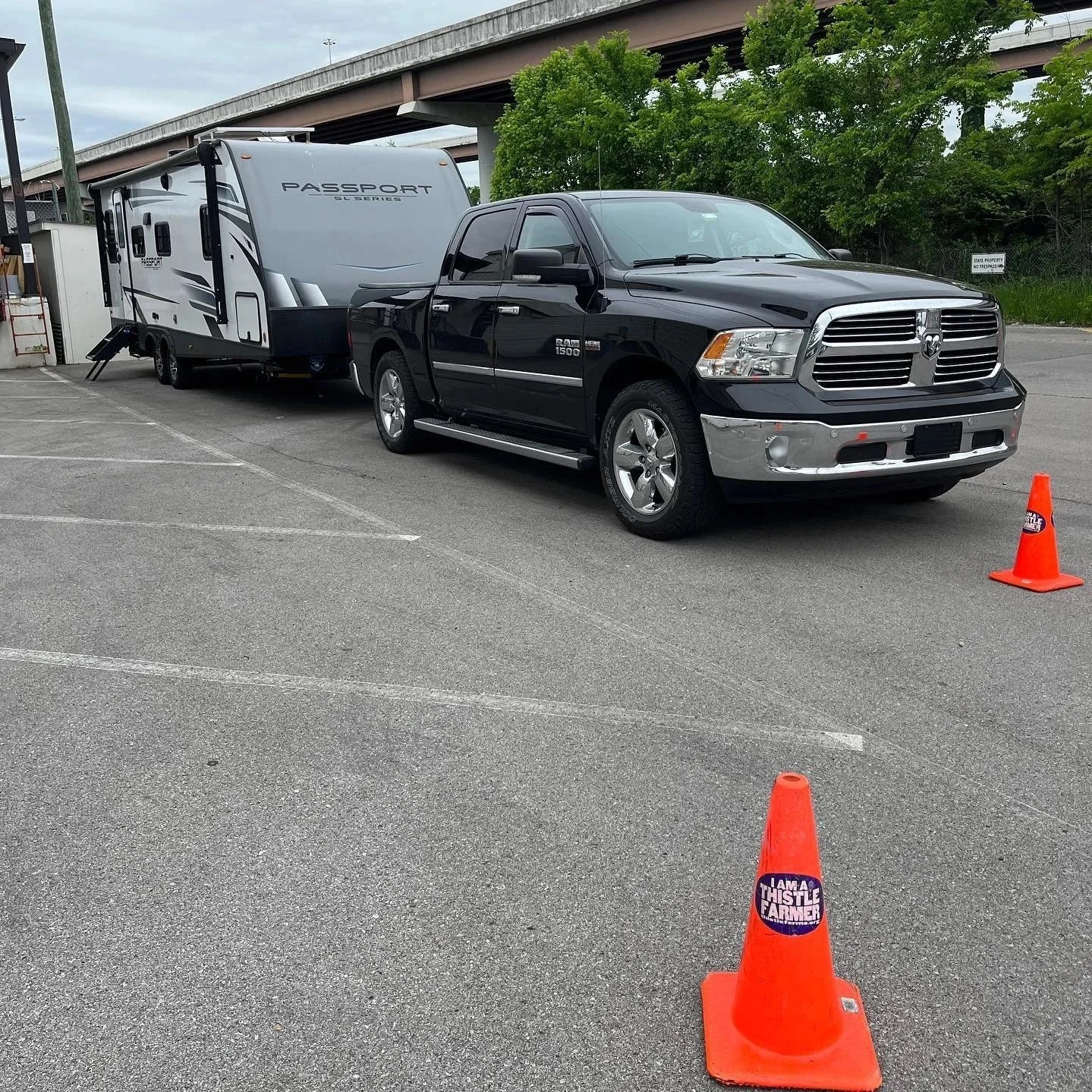
Thistle Farms - Nashville, TN
When we pulled into Thistle Farms that evening, an employee greeted us and pointed out where we could park for the night. Before heading back inside, he offered one small piece of advice: it’s usually quiet around here, he said, aside from a few homeless folks who’d occasionally caused some trouble. “You should be fine otherwise.”
We appreciated the honesty. And truthfully, we never felt unsafe — but as we settled in for the evening, the experience was different than what we expected. We’d imagined something more rural, something like the “store in town just down the road from the farm” kind of charm. Instead, we were tucked beneath a highway overpass, surrounded by city sounds and the hum of traffic.
Still, as the night went on, we couldn’t help but reflect on that gap between expectation and reality — not just in our stay, but in the broader mission of Thistle Farms itself. The work they do is raw, real, and happening right where it’s needed most.
This authenticity was beautiful. The reality was so much better than the surface level expectations.
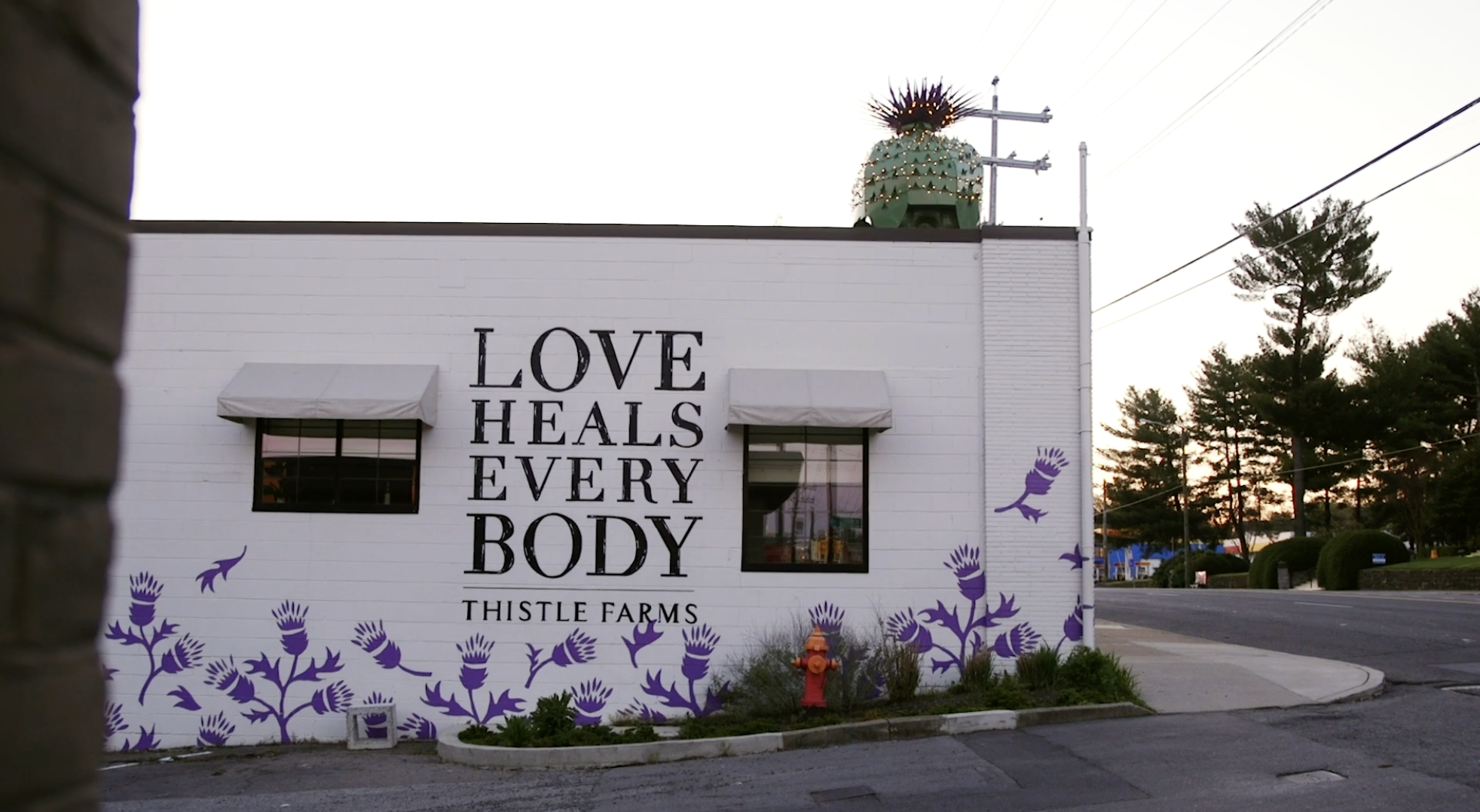
Watch The Video Above Before Reading On:
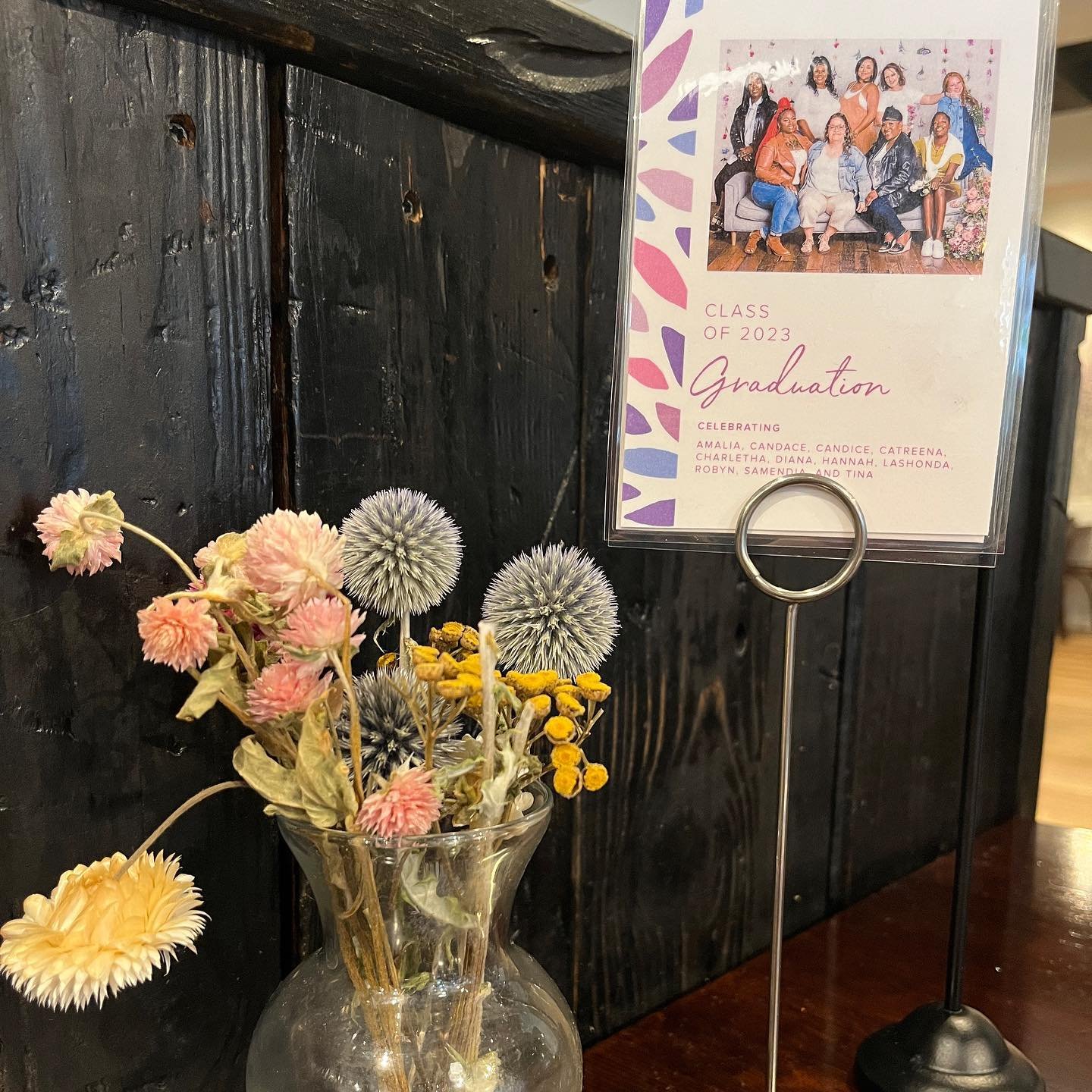
Thistle Farms is a nonprofit social enterprise dedicated to helping women survivors recover and heal from prostitution, trafficking, and addiction. We do this by providing a safe place to live, a meaningful job, and a lifelong sisterhood of support.
Why the thistle?
Thistles grow on the streets and alleys where the women of Thistle Farms have walked.
Considered weeds by many, thistles have a deep root that can shoot through concrete and survive drought.
The resilience, vibrancy, and healing qualities of the thistle parallel the survival and flourishing of women survivors.
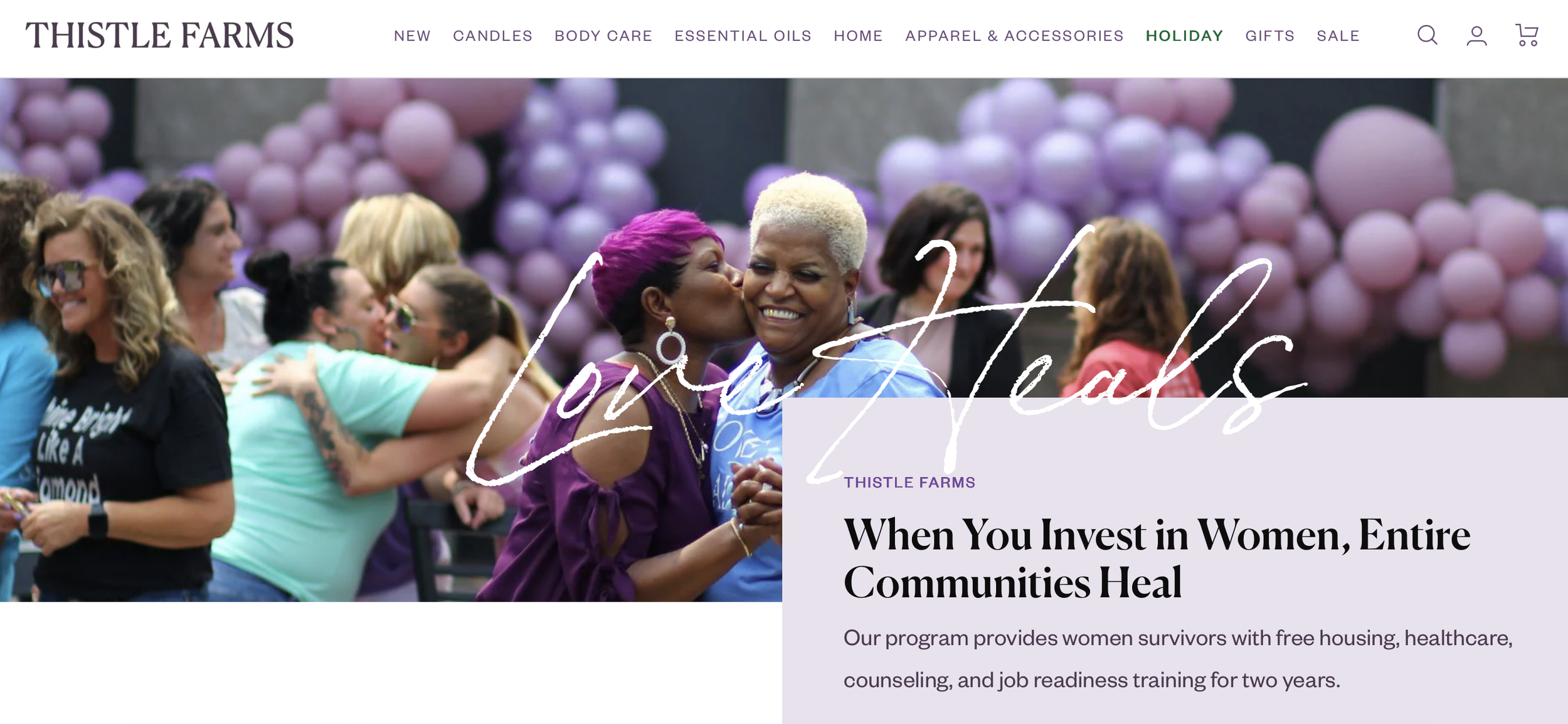
“Long before our adventure, I read, “Love Heals” by Becca Stevens. She is an Episcopal priest and founder of Thistle farms. Thistle farms “produces candles and body-care products and operates a café and artisan studio under the motto, of course, Love heals…[they] make products that [are] healing for the earth and our bodies…” Love heals, is the motto for Thistle Farms, as well as the title of her book. Just in case you thought Becca was writing about peace and love while sipping tea and smelling lavender, I can assure you that most days she is not. The work that she is doing is difficult. Thistle Farms is much more than a store and café; it is a place for women who have escaped sex trafficking to find healing, hope and home. These are women who have some real healing to do and for them (and for us) forgiveness is an important part of finally finding some peace.
Becca Stevens writes, “Forgiveness doesn’t mean that we forget or that we don’t hold one another accountable. It means that we can pray for the other person without sarcasm in our hearts and that we no longer think of the one who has wronged us as our enemy. This, like most of the way of healing, is easier said than done.”
I used these quotes in a sermon about peace during advent in 2018. The sermon itself is all over the place and definitely reflects the stress I was feeling during this time of transition in that church. If I was writing about peace in advent again, I think I would focus more on restorative justice as part of the healing and forgiving process. Thistle farms is a place where women can heal, learn to love and forgive themselves (as well as others) and rebuild a new life. Peace isn’t a sappy holiday feeling, but it is accomplished after intentional work towards a new way of being.
Thistle Farms inspired more than a sermon; it inspired community outreach in a way I had not imagined possible. Part of my work at the church was to run the Days for Girls program. DfG is inspiring on its own, but I saw the potential for it to be more than washable menstrual pads. It was a place to engage with the community around the church, especially for people who weren’t interested in worship but were interested in doing good work in the world. The longer I worked to become connected to the community the more diverse the DfG workshop became. Eventually, it included women from a halfway house who were transitioning out of the prison system. The more I learned about these women, the more I saw similarities between them and the women at Thistle Farms. Many women end up in our prison systems as a reaction to violence done to them. Some turn to drugs or alcohol to cope and those addictions lead them on a path towards jail. There was one woman who was particularly dear to my DfG team. She was with us for much longer than typical because she was waiting for an out-of-state parol officer willing to take her on. (It’s so much more complicated that one issue but that was the biggest hurdle. Her situation was truly unique. Most women could measure their time at the Community Corrections House in months and it was very unusual for anyone to be there a full year). I got to know her as someone who was well on her way to recovery. She was sober and able to quit cigarettes (which she said was the hardest) in the time that I knew her. She helped me, and a couple women from the church, compose a story for our church newsletter about a typical (but fictional) woman that lived in the CCC House. We wouldn’t have been able to capture this story if we hadn’t been in a deep relationship with her. I’m truly thankful for the gift of her presence in my life.
For me, a visit to Thistle Farms was a pilgrimage to a place that inspired how I understood my neighbors and ministry amongst them. Unfortunately, this trip was not a sabbatical, I had dissolved my call with the church (in secular terms I quit, and negotiated the end of my contract) but couldn’t tell anyone what was happening before I left. The congregation was notified by email the night before my “sabbatical” began. So while this visit was inspiring, I was also grieving the people I was leaving that did not get a formal goodbye. It was painful. But travel, especially to places like Thistle Farms, has been part of my healing process. Healing isn’t linear, more like a spiral that eventually leads to a new way of life. Love and forgiveness can lead the way to peace. “
-Karie

PHOTO CREDIT: OUR LIFE IN THE REARVIEW
As you enter The Café at Thistle Farms you are greeted by a chandelier of tea cups. The tea cups dangle on varying lengths of threads, creating an eight-by-six-foot wave.
The cups represent survivors from around the world. Those cups were collected - along with the story of the person who gifted it to us - until we had hundreds.
One is from a then ninety-five-year-old Japanese woman who had been in an internment camp in World War II. Her cup is stamped with a Japanese logo that was banned during the war from being imported to the United States.
There is a cup that told the story of a heroic grandmother who survived the brutality of an older relative and ran away to make a home. The cup was donated by her granddaughter and came to us with a chip, reminding us of the beauty in brokenness.
One of the treasured cups came from the child of a survivor in Bosnia, who was able to flee the genocide. The story came with the beautiful message that surviving, too, takes its toll.
The teacups represent The Café’s founding principle that we need to show hospitality to all. Every cup has a story, and every person walking through that door is carrying a story.
Our job is simply to welcome them and offer them a sweet cup of healing tea. -BECCA STEVENS
#PracticallyDivine#ThistleFarms#LoveHeals#Tea#Stories#Healing#Teatime
“As a man who has spent most of his life surrounded by strong women, I’ve seen firsthand what is possible in spite of active addiction. I’ve witnessed greatness in the face of overwhelming odds when support is provided at critical points in a woman’s journey. I’ve also seen what happens when help and resources aren’t available.”
— Kurtis
The CAFE and SHOP at Thistle Farms
MORE THAN A MEAL
A space for those who hunger for justice.
The Café is a tangible sign of the deeper meaning of healing and the honor of serving. Come whenever you are thirsty for tea, coffee, and a good story.
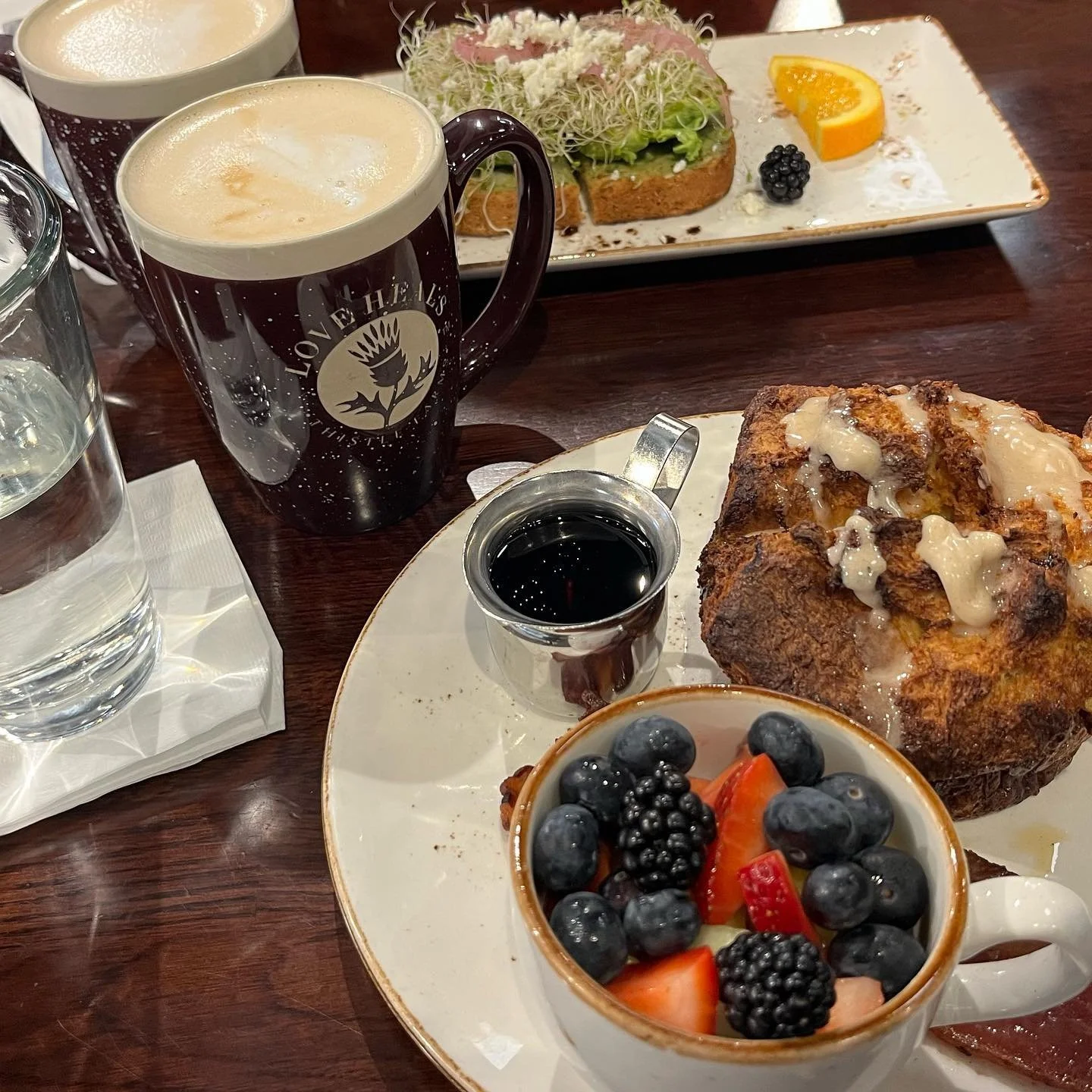
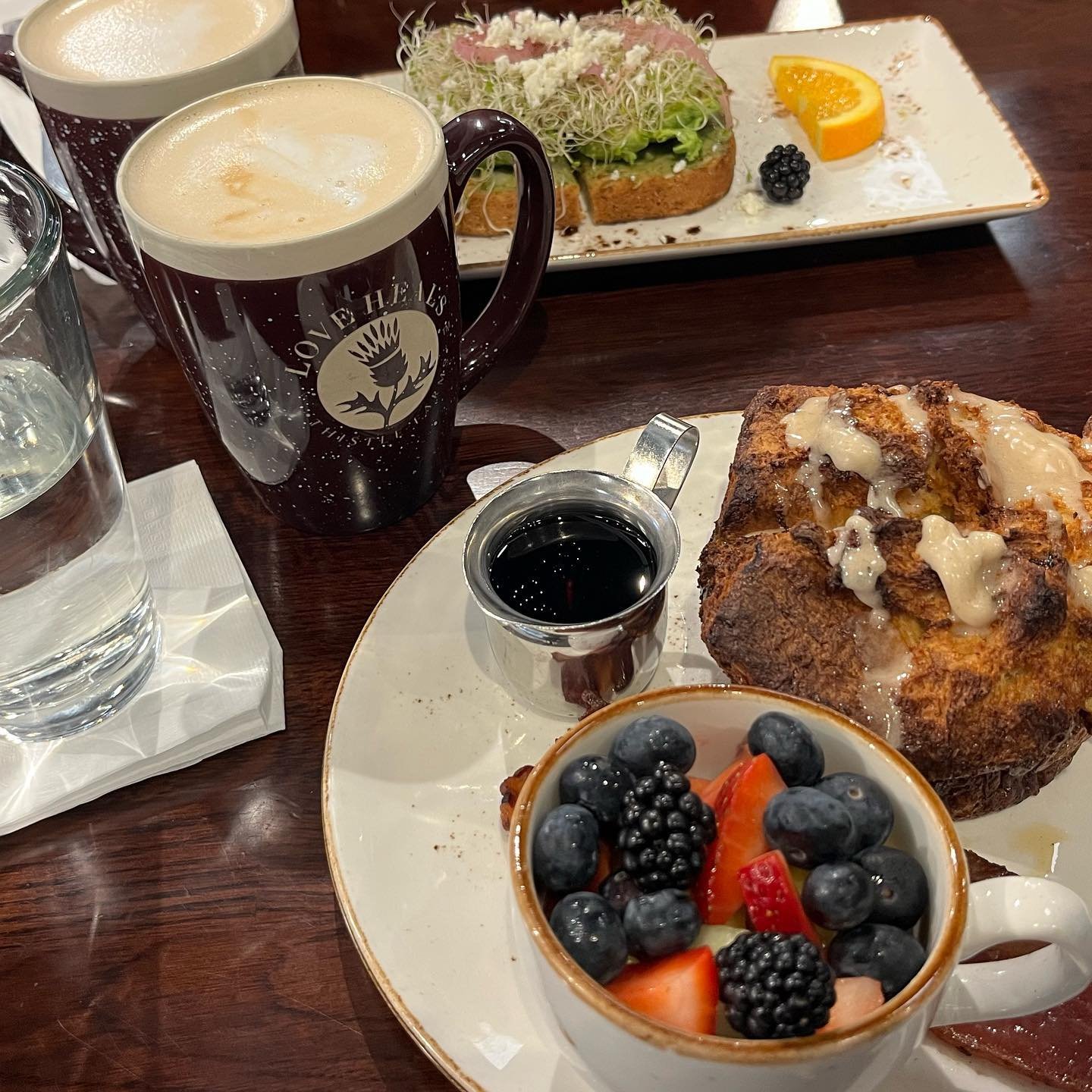
Lavender Latte’s and Breakfast in The Cafe
The next morning we walked P around the grounds so she could mark her territory and then made our way to the Cafe for breakfast. The Cafe is one of Three Social Enterprises at Thistle farms. The goal of each of our social enterprises is to provide meaningful employment for those we serve, as well as, provide an entrepreneurial income stream for our mission. The cafe operates under these guiding principles:
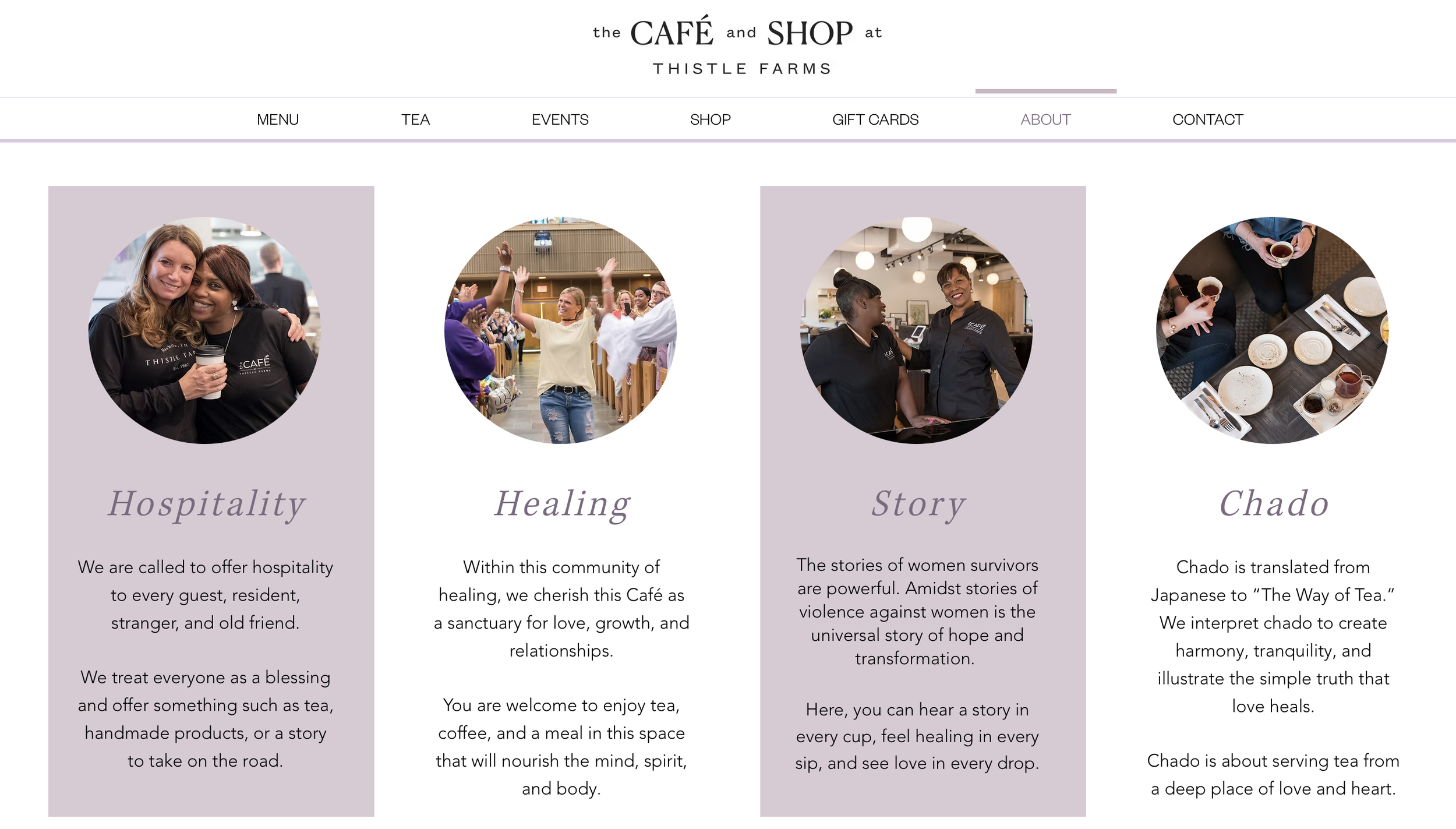
www.thistlefarms.org
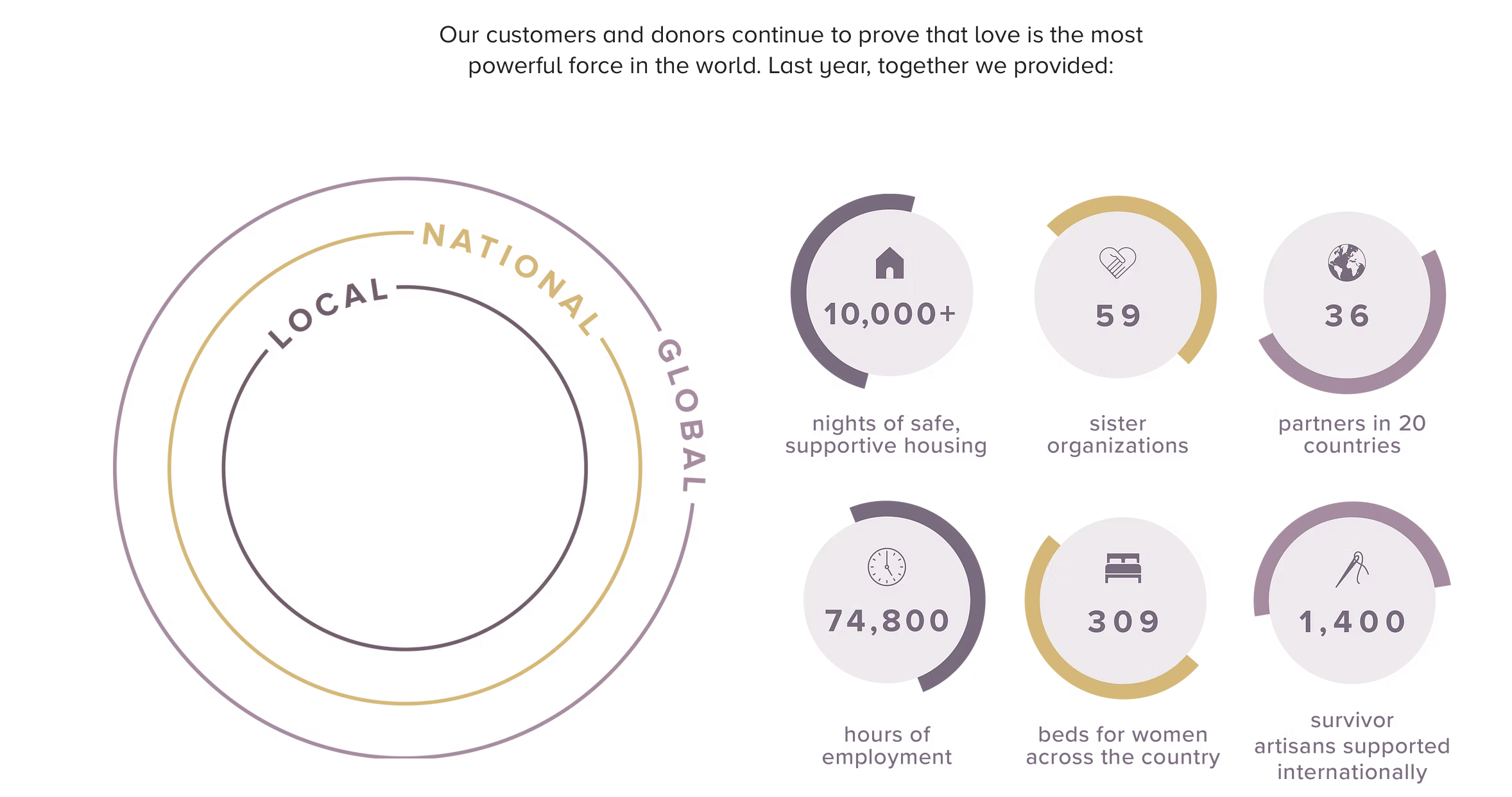
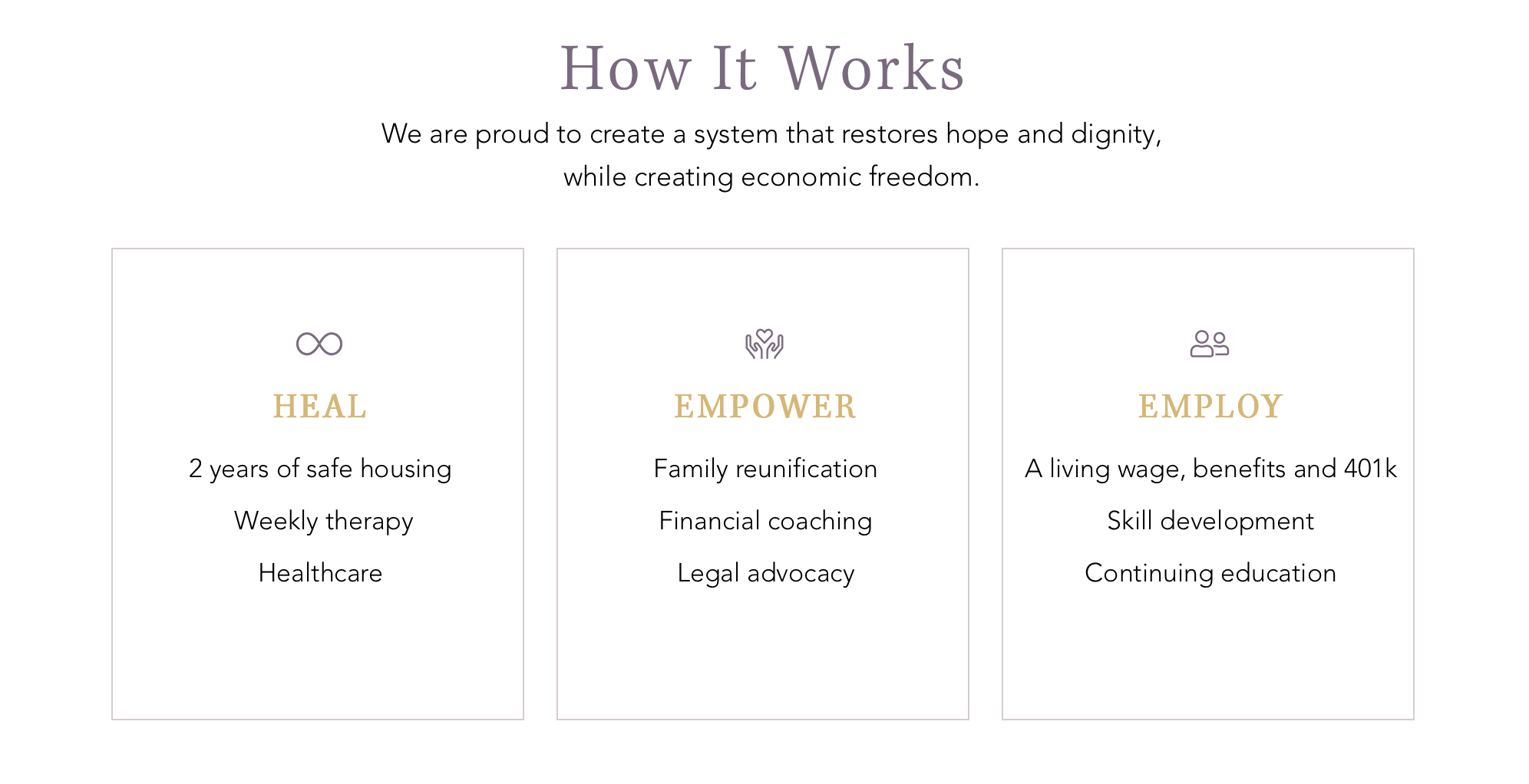
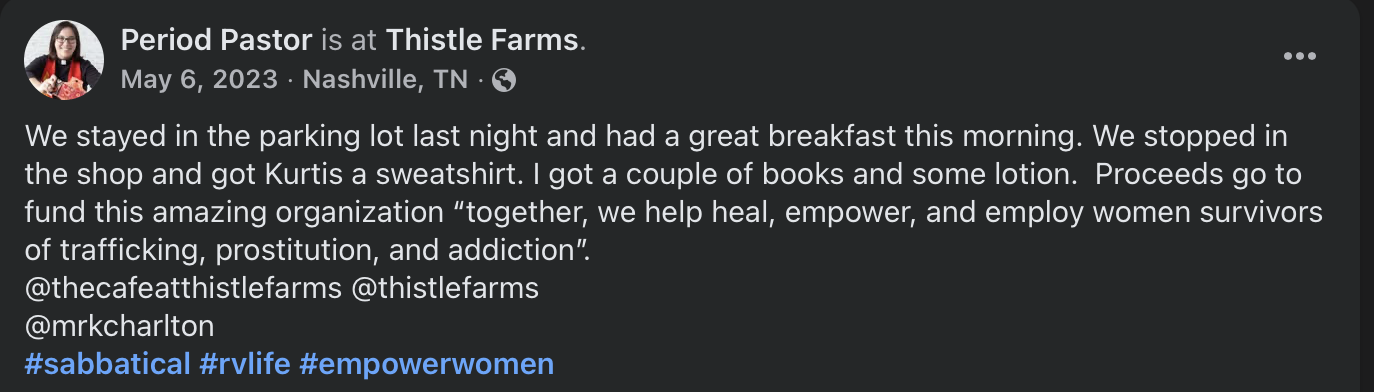
What began as a simple point of documentation on our journey became a moment of reflection on the grace we received from Thistle Farms. Their hospitality — extended to complete strangers requesting an overnight stay on their company grounds — was humbling. A warm meal, made with loving hands, seemed to reach directly into our souls.
We felt privileged to contribute, even in a small way, to such an enormous mission — one surrounded by stories of human kindness, redemption, and love. Becca was right: Love heals. Not just the women in that building, the participants in their programs, or those touched by their work, but also the people who choose to walk through their doors and witness what it truly takes to mend a broken spirit.
It’s hope in the face of overwhelming odds, generational poverty, and the audacity it takes to remain tenacious in the midst of adversity.
As we pulled out the next morning, the city began to fade in the rearview, but the experience stayed with us. Travel has a way of teaching lessons you never planned for — the kind that don’t show up on an itinerary or a map. Thistle Farms reminded us that beauty doesn’t always live in the postcard moments. Sometimes, it’s found under overpasses, in parking lots, and in the quiet acts of kindness that restore faith in humanity. This stop wasn’t what we expected — it was better. It was real.